Key Takeaways
- 1Medical complications from rhinoplasty — bleeding and infection — occur in less than 1% of patients when performed by an experienced specialist.
- 2Cosmetic complications (unfavourable aesthetic results) occur in approximately 10% of patients; most are minor and not visible to others.
- 3Serious cosmetic complications such as polly beak deformity or inverted-V deformity occur in less than 1% of cases when performed by a rhinoplasty specialist.
- 4Your surgeon's experience, consultation process, and surgical technique are the single biggest factors influencing your risk profile.
- 5A thorough pre-operative consultation — where your surgeon identifies your specific risk factors and explains how they plan to mitigate them — is the most important step you can take.
Understanding rhinoplasty risk
Every surgical procedure carries risk. Rhinoplasty is no exception — but the risk profile of a rhinoplasty performed by a specialist with 25 years of experience is very different from the risk profile of the same procedure performed by a general plastic surgeon who does it occasionally. Understanding this distinction is the most important thing you can do before beginning your rhinoplasty journey.
Rhinoplasty risks fall into two distinct categories: medical risks (health complications that affect your wellbeing) and cosmetic risks (unfavourable aesthetic results that affect how your nose looks). These categories have very different incidence rates and very different implications for how you should evaluate them.
"Understanding the risks — and putting them into perspective — is an important part of the process leading up to your rhinoplasty. Choosing the right surgeon can help."
Medical risks: what they are and how rare they are
The medical risks of rhinoplasty are the same as for any surgical procedure: bleeding and infection. These are the risks that relate to your health and physical wellbeing, as opposed to the aesthetic outcome of the surgery.
The good news is that these complications are uncommon. In rhinoplasty performed by an experienced specialist, less than 1% of patients will experience bleeding or infection as a direct result of the procedure. When they do occur, these issues are generally manageable and not dangerous — provided they are identified and treated promptly.
Anaesthesia
Rhinoplasty at 8 West Clinic is performed under general anaesthesia administered by a board-certified anaesthesiologist. Serious anaesthetic complications are exceedingly rare in healthy patients. Your pre-operative assessment will screen for any factors that might increase anaesthetic risk, including medications, health conditions, and lifestyle factors such as smoking.
Bleeding (haematoma)
A small amount of bleeding is normal after any surgery. Significant post-operative bleeding — a haematoma — is uncommon. Risk factors include blood-thinning medications (including aspirin, ibuprofen, and many supplements), smoking, and certain health conditions. You will be given a detailed list of medications and supplements to avoid in the weeks before surgery.
Infection
Infection after rhinoplasty is rare. Prophylactic antibiotics are routinely administered before and after surgery. Signs of infection — increasing redness, warmth, swelling, or discharge — should be reported to the clinic immediately. At 8 West Clinic, patients have access to a 24-hour emergency contact number throughout their recovery.
Health conditions that increase medical risk
Certain health conditions can increase the medical risk of rhinoplasty. These include uncontrolled diabetes, bleeding disorders, autoimmune conditions, and patients who are taking blood thinners for a medical reason. It is uncommon for a typical rhinoplasty patient — who is generally younger and in good health — to have conditions that make surgery unsafe. However, a thorough medical history is taken at consultation and pre-operative assessment to identify any factors that require management before surgery.
Cosmetic risks: the more common category
Cosmetic complications — unfavourable aesthetic results — are more common than medical complications and are the category most patients are understandably concerned about. They refer to the way your nose looks after surgery, rather than your health.
The discussion of cosmetic risks is often under-addressed in rhinoplasty consultations. Expert rhinoplasty surgeons have well-defined consultation procedures and will be able to predict the complications that each patient might be at risk for, then set expectations so the patient can make an informed decision.
Cosmetic complications can be divided into two categories: minor expected complications, and more serious preventable complications.
Minor expected complications (~10% of patients)
These occur in roughly 10% of rhinoplasty patients and refer to unfavourable or unexpected minor irregularities. Importantly, they are often not perceptible to the patient or others — they are small, difficult-to-see irregularities that most patients are not bothered by, particularly if they were informed about the possibility during their consultation and are not striving for perfection.
| Complication | Description | Frequency |
|---|---|---|
| Recurrence of a hump | A small amount of the original dorsal hump may return as swelling resolves and the nose heals. This is a biological response that is not fully within the surgeon's control. | Minor / Expected |
| Slight descent of nasal tip | The tip position may drop slightly from the immediate post-operative position as swelling resolves and the tissues settle. | Minor / Expected |
| Slight twisting of the nose | A very minor degree of asymmetry or twist may be present in the final result, particularly in patients who had pre-existing asymmetry. | Minor / Expected |
| Minor visible irregularities | Small surface irregularities may be visible, particularly in patients with thin skin where the underlying cartilage and bone are more visible. | Minor / Expected |
| Under or over correction | The degree of change achieved may be slightly more or less than the intended result. | Minor / Expected |
Serious cosmetic complications: rare but important to understand
More dramatic cosmetic complications are those where the visual effect is noticeable to the patient and to others. These are considered serious because they typically require revision surgery to correct. When rhinoplasty is performed by a specialist, these complications occur in less than 1% of patients. When performed by inexperienced surgeons, the complication rate is expected to be significantly higher.
Polly beak deformity
A polly beak deformity occurs when the area just above the nasal tip (the supratip) is too full relative to the tip itself, creating a beak-like profile. It can result from insufficient tip projection, excessive scar tissue formation in the supratip area, or inadequate hump reduction. It is one of the more common serious cosmetic complications of rhinoplasty and is largely preventable with good surgical technique and appropriate post-operative taping.
Inverted-V deformity
An inverted-V deformity occurs when the middle third of the nose collapses inward, creating a visible V-shaped indentation on the bridge when viewed from the front. It results from inadequate support of the upper lateral cartilages after hump reduction — a complication that is prevented through the use of spreader grafts or spreader flaps during surgery. This is one of the reasons that technique selection matters so much in rhinoplasty.
Skin-related complications
Patients with very thin skin are at greater risk of visible surface irregularities, as the skin provides less camouflage for the underlying cartilage and bone framework. Patients with very thick skin may experience prolonged swelling and less definition in the final result. These are not complications in the traditional sense — they are anatomical factors that your surgeon should identify and discuss with you at consultation, and that should inform the surgical plan.
How risks are mitigated at 8 West Clinic
Risk mitigation in rhinoplasty happens at every stage of the process — from the initial consultation through to the post-operative period. At 8 West Clinic, the following measures are standard practice:
- Comprehensive rhinoplasty analysis at consultationDr. Buonassisi performs a detailed analysis of your nasal anatomy at consultation, identifying the specific risk factors that apply to your case — including skin thickness, cartilage strength, pre-existing asymmetry, and the degree of change you are seeking. This analysis directly informs the surgical plan.
- Computer imaging and before/after photo reviewVisual tools are used to communicate potential cosmetic risks and to ensure your expectations are aligned with what is surgically achievable. Reviewing before-and-after photos of patients with similar anatomy is an important part of this process.
- Technique selection based on anatomyThe surgical technique used is selected based on your specific anatomy and goals — not a one-size-fits-all approach. Preservation rhinoplasty, piezo ultrasonic rhinoplasty, and conventional open rhinoplasty each have different risk profiles, and the choice of technique is made to minimise the risks specific to your case.
- Post-operative taping and monitoringNasal taping after surgery helps reduce swelling and prevent scar tissue formation in the supratip area — reducing the risk of polly beak deformity. Patients are given detailed instructions and followed closely during the recovery period.
- 24-hour emergency contactAll surgical patients have access to a 24-hour emergency phone number throughout their recovery. If you experience any signs of medical complication — significant bleeding, signs of infection, or any other concern — you can reach the clinical team immediately.
- Clear revision policyDr. Buonassisi discusses his revision policy with all patients at consultation. Understanding what happens if you are dissatisfied with your result is an important part of informed consent and should be addressed before you proceed with surgery.
"Expert rhinoplasty surgeons are trained to predict the changes that might happen to your nose after surgery and plan to prevent them with the techniques they select for you."
The role of surgeon selection in your risk profile
The single most important factor in your rhinoplasty risk profile is the surgeon you choose. The difference in complication rates between a rhinoplasty specialist and a general plastic surgeon who performs the procedure occasionally is significant. Serious cosmetic complications occur in less than 1% of cases when performed by a specialist — but the rate is expected to be much higher with less experienced surgeons.
Patients who experience unsatisfactory results typically have one thing in common: a consultation that did not adequately address their specific risk factors. A reputable rhinoplasty surgeon will use the consultation to assess whether you are a good candidate for the procedure — and will decline to operate if the risk of cosmetic complication is too great and there are no methods to mitigate it.
Just as the surgeon is assessing you, you should be assessing the surgeon. The consultation is your opportunity to evaluate their experience, their approach to risk, and their willingness to give you honest answers.
Questions to ask your surgeon at consultation
A well-designed consultation will address your specific risk factors without prompting. But if it does not, the following questions will help you get the information you need:
- What specific cosmetic complications am I at risk for, given my anatomy and goals?
- What surgical technique will you use, and how does that choice reduce my risk?
- What is your personal complication rate for the procedure you are recommending for me?
- How do you handle medical complications — do you have a 24-hour emergency contact? Do you have hospital admitting privileges?
- What is your revision policy if I am not satisfied with my result?
- Are there any factors in my anatomy or goals that make you hesitant to proceed?
A surgeon who dismisses these questions, gives vague answers, or does not raise risk proactively during the consultation is a red flag. Confidence in your surgeon's honesty and thoroughness is as important as confidence in their technical skill.
Frequently asked questions
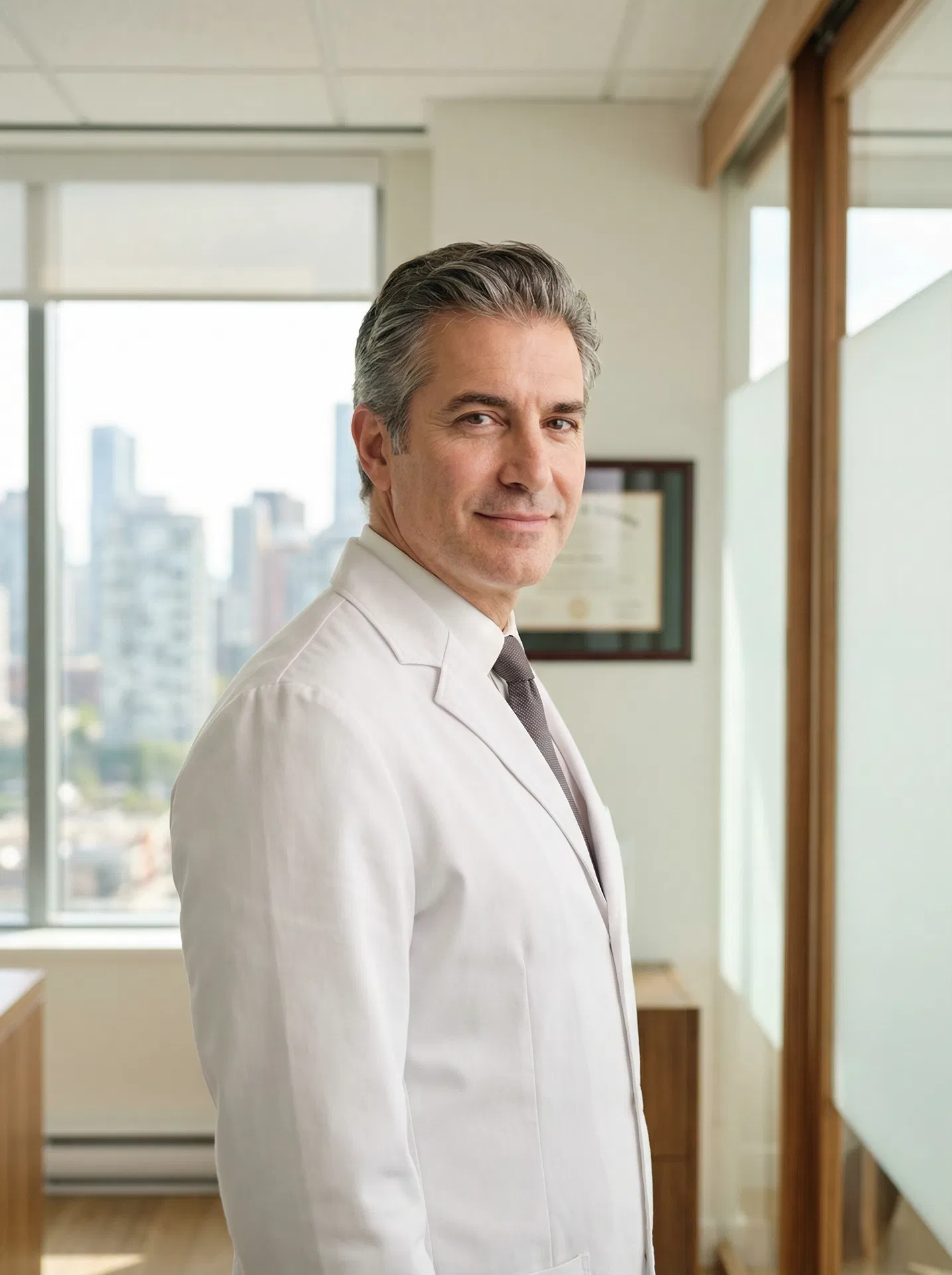
Written by
Dr. Thomas Buonassisi, MD FRCSC ABFPRS
Facial Plastic Surgeon, 8 West Clinic
Dr. Buonassisi has performed over 4,000 facial cosmetic surgeries over 25+ years, specializing exclusively in rhinoplasty and facial procedures. He is one of Canada's most experienced rhinoplasty specialists and has published extensively on risk mitigation through surgical technique and patient selection.